0
- View This Video

Nashawnte gives tips to overcome fears of sedation

Nashawnte is a 9 year old diagnosed with pancreatitis. When her pancreatitis flairs up she has a lot of pain and has to go to the hospital. Sometimes she has to have an NJ tube inserted which requires sedation. She’s SCARED of sedation but has been working very hard to overcome her fears! Learn more about what to expect when getting anesthesia.

0
- View This Video

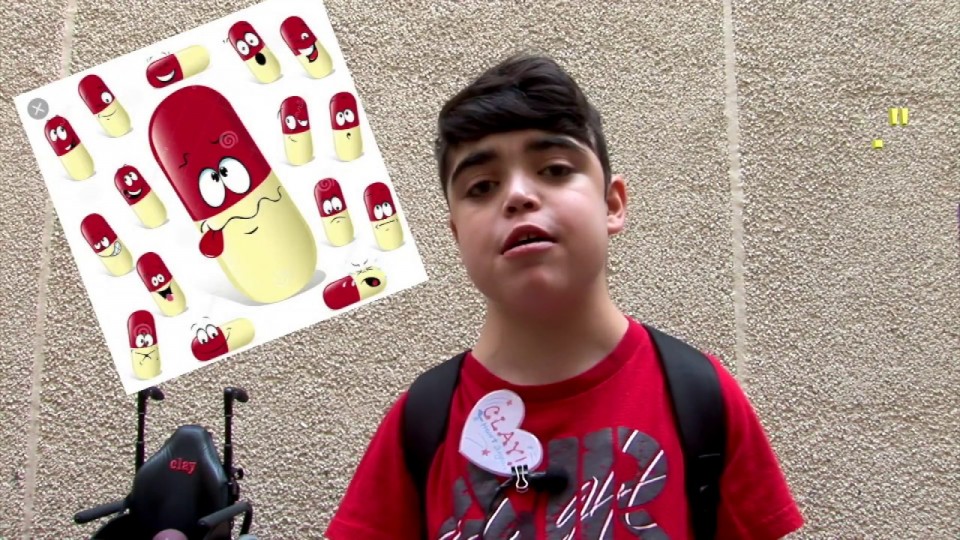
Cody talks about Pill Swallowing

Cody has cancer and also has had a hard tough taking his medication. He has to swallow many large pills for his medication. While this has been difficult, Cody has learned some tips and ways to help get him used to swallowing medicine. Watch as Cody walks through a few different techniques.

You can also learn more about medicine and what it does for you in our health library!

2
- View This Video

Tyler’s tips for kids and parents coping with divorce

Tyler’s gives tips and advice to kids and parents who are going through divorce.

Divorce is stressful for parents and kids alike. Although reactions will depend on a child’s age, temperament, and the circumstances surrounding the split, many kids feel sad, frustrated, angry, and anxious — and it’s not uncommon for them to act out because of those feelings.

Learn more

0
- View This Video

Justin shows how to check his insulin

What Is Diabetes?

Diabetes is a disease that affects how the body uses glucose (pronounced: gloo-kose), a sugar that is the body’s main source of fuel. Like a CD player need batteries, your body needs glucose to keep running. Here’s how it should work.

You eat. Glucose from the food enters your bloodstream. Your pancreas makes a hormone called insulin (pronounced: in-suh-lin). Insulin helps the glucose get into the body’s cells. Your body gets the energy it needs.

The pancreas is a long, flat gland in your belly that helps your body digest food. It also makes insulin. Insulin is kind of like a key that opens the doors to the cells of the body. It lets the glucose in. Then the glucose can move out of the blood and into the cells.

But if someone has diabetes, the body either can’t make insulin or the insulin doesn’t work in the body like it should. The glucose can’t get into the cells normally, so the blood sugar level gets too high. Lots of sugar in the blood makes people sick if they don’t get treatment.

Learn more

1
- View This Video

Justin talks about type 1 diabetes

Sorting Myth From Fact

There’s a lot of diabetes information out there — unfortunately, not all of it is based on facts. Although you can find a lot of good information about diabetes on the Internet, you can also find bad information. Following bad advice could actually harm a person with diabetes. Sometimes you don’t even need to log onto a website to get incorrect info — family members or friends can give out information that’s incorrect, inaccurate, or misleading without even knowing it!

It’s a good idea to talk to your diabetes health care team if you ever come across information that doesn’t seem quite right or sounds too good to be true. And be cautious if someone tells you to do the opposite of what your diabetes health care team has told you — always check with your doctors first to get the scoop on what’s helpful and what’s harmful. Learn more

0
- View This Video

Justin’s mom talks about his diabetes

Does your child have type 1 or type 2 diabetes? Learn how to manage the disease and keep your child healthy. Check out these helpful tools.

The Pediatric Endocrinology service at Kosair Children’s Hospital provides diagnostic and therapeutic services for children with disorders and diseases including:

  • Diabetes mellitus
  • Metabolic diseases
  • Disorders of physical growth, sexual maturation, thyroid function, adrenal function, pituitary function, and calcium and phosphorous metabolism.

We provide diagnostic endocrine tests for patients in the areas of endocrinology and carbohydrate, amino acid, and mineral and lipid metabolism. We can also address growth abnormalities and the range of conditions that can cause them.

4
- View This Video

Georgia copes with Crohn’s disease, Part 2

Georgia is 14 years old and is living with Crohn’s disease. In this video Georgia answers the questions of ‘how does Crohn’s affect what you eat?’, ‘what about stress?’, ‘how do you handle the pain?’, ‘what are the side affects of steroids?’, and ‘how do you just live life?’. Listen and watch as Georgia explains her situation and provides encouragement to others that are dealing with Crohn’s.

View Part 1 of Georgia’s story

What Are the Different Types of Inflammatory Bowel Disease (IBD)?

The two most common types of IBD are called Crohn’s disease and ulcerative colitis (say: ul-sur-uh-tiv keh-lye-tis).

Crohn’s disease most often develops where the small and large intestines meet and usually causes all layers of the intestinal wall to become sore, inflamed, and swollen. Crohn’s disease can affect any part of the digestive tract, including the mouth, esophagus, stomach, small intestines, large intestines, and anus.

Unlike Crohn’s disease, ulcerative colitis inflames only the inner lining of all or part of the colon and rectum. Sometimes, only the rectum is affected. In both Crohn’s disease and ulcerative colitis, inflammation may stick around for many years, flaring up over and over again.

1
- View This Video

Georgia deals with Crohn’s disease, Part 1

Georgia is 14 years old and has Crohn’s disease. In this video, which is part 1 of 2, Georgia answers the question’s of ‘what is Crohn’s disease?’, ‘how did you learn that you had Crohn’s disease?’, ‘what was it like being in the hospital for so long?’, ‘what helped you cope?’, ‘how do you manage day-to-day?’, and ‘how did kids at school react?’. Watch as Georgia carefully explains how she has overcome great difficulty to live happier and healthier while managing her disease.

View Part 2 of Georgia’s story

What Are the Different Types of IBD?

The two most common types of IBD are called Crohn’s disease and ulcerative colitis (say: ul-sur-uh-tiv keh-lye-tis).

Crohn’s disease most often develops where the small and large intestines meet and usually causes all layers of the intestinal wall to become sore, inflamed, and swollen. Crohn’s disease can affect any part of the digestive tract, including the mouth, esophagus, stomach, small intestines, large intestines, and anus.

0
- View This Video

Amber shows some belly breathing techniques

Sometimes all you need to relax and calm down is to focus on taking deep breathes. Watch as Amber shows us some techniques for deep belly breathing.

About Your Lungs and Respiratory System

What’s something that you do all day, every day, no matter where you are or who you’re with?

(a) think about what’s for lunch tomorrow
(b) put your finger in your nose
(c) hum your favorite song
(d) breathe

It’s possible that some kids could say (a) or (c) or that others might even say — yikes! — (b). But every single person in the world has to say (d). Breathing air is necessary for keeping humans (and many animals) alive. And the two parts that are large and in charge when it comes to breathing? If you guessed your lungs, you’re right!

Your lungs make up one of the largest organs in your body, and they work with your respiratory system to allow you to take in fresh air, get rid of stale air, and even talk. Let’s take a tour of the lungs!

0
- View This Video

Tabitha encourages others dealing with cystic fibrosis

Tabitha is 15 years old and has both cystic fibrosis and diabetes. Despite her illness Tabitha is extremely positive and some great words of encouragement for others that are going through a tough time or dealing with illness. Watch more videos from Tabitha!

Living With CF

Kids who have CF have to take care of themselves, but thanks to a better understanding of what causes CF and improved treatment, they can go to school and do regular stuff, just like other kids. Meanwhile, researchers are working on even better treatments and hoping that one day there will be a cure. Learn more

0
- View This Video

Tabitha shows how she does her acapella treatment for cystic fibrosis

Tabitha is 15 and has cystic fibrosis. In this segment Tabitha shows us how she puts together her acapella treatment at home. Watch more videos from Tabitha!

What Causes CF?

Approximately 30,000 people in the United States have been diagnosed with CF, which affects both males and females. It’s not contagious, so you can’t catch CF from another person.

Cystic fibrosis is an inherited disease caused by mutations (changes) in a gene on chromosome 7, one of the 23 pairs of chromosomes that children inherit from their parents. Cystic fibrosis occurs because of mutations in the gene that makes a protein called CFTR (cystic fibrosis transmembrane regulator). A person with CF produces abnormal CFTR protein — or no CFTR protein at all, which causes the body to make thick, sticky mucus instead of the thin, watery kind. Read more

0
- View This Video

Juliana discusses how she has coped with a brain tumor

Juliana is a brain tumor survivor. She talks about the complications through the years and how she has used art and family to help her through tough times.

What Is a Brain Tumor?

A tumor is any mass caused by abnormal or uncontrolled growth of cells. Tumors in the brain are categorized according to several factors, including where they’re located, the type of cells involved, and how quickly they’re growing. Learn more

0
- View This Video

Devon’s battle with childhood cancer

Devon was diagnosed with cancer at only 18 months. Listen as he talk about the way this experience has shaped his life.

About RMS

Rhabdomyosarcoma (RMS or “rhabdo”) is a cancerous tumor that develops in the body’s soft tissues, usually the muscles. It can affect the head, neck, bladder, vagina, arms, legs, and trunk. Cells from these tumors are often fast growing and can spread (metastasize) to other parts of the body. Learn more

0
- View This Video

Natasha is a survivor of cancer

Natasha is a cancer survivor. Listen to her words of encouragement and find out more on what it is like to deal with cancer.

When the Person With Cancer is You

Chances are you know someone who has had cancer, such as an older relative or someone in a friend’s family. But sometimes cancer affects teens and when the person affected is you, the word cancer takes on a new meaning — one that can feel personal and frightening.

If you’ve been diagnosed with cancer, you should know that although it’s unusual for people to have cancer during their teenage years, you’re certainly not alone. The good news is that most teens who get cancer survive and return to their everyday lives. Read on to learn about how to cope if you or someone you know has cancer.

1
- View This Video

Vanessa talks about coping with her brother’s cancer

Vanessa’s younger brother Caleb was diagnosed with cancer when he was 13 years old. Watch as Vanessa talks about how she and her family worked through Caleb’s treatment and helped support one another.

Siblings can be many things: friends, allies, role models — and let’s face it, pests. (Of course, it goes without saying that if you’ve got a sibling, you are a sibling!)

But when your sibling has a serious illness, like cancer or autism, it adds another dimension to your relationship — and to your life. You may find yourself juggling some pretty intense and confusing emotions. You’re not alone in feeling this way, and it’s important to take care of yourself during this stressful time. Learn more about how to cope with a sick sibling.

0
- View This Video

Caleb is a survivor of pediatric cancer

When Caleb was 13 he was diagnosed with cancer. Watch as he talks about his battle and victory and also how he coped with the disease. Also be sure to check out his sister’s video on how she dealt with helping a sibling with cancer.

What Is Cancer?

All kinds of cancer, including childhood cancer, have a common disease process — cells grow out of control, develop abnormal sizes and shapes, ignore their typical boundaries inside the body, destroy their neighbor cells, and can ultimately spread (or metastasize) to other organs and tissues. As cancer cells grow, they demand more and more of the body’s nutrition. Cancer takes a child’s strength, destroys organs and bones, and weakens the body’s defenses against other illnesses. Learn more

0
- View This Video

Tabitha does her vest treatment for cystic fibrosis

Watch as Tabitha shows us how she does her vest treatments at home for cystic fibrosis. See more videos from Tabitha.

What is Cystic Fibrosis
Cystic fibrosis (CF) is an inherited disease that causes the body to produce mucus that’s extremely thick and sticky. The mucus in people with CF is thicker than normal because CF affects cells in the epithelium (pronounced: eh-puh-thee-lee-um), the layer of cells that lines the passages in the body’s organs. In a person who does not have CF, the epithelial cells produce a thin, watery mucus that acts like a lubricant and helps protect the body’s tissues. In a person with CF, however, the thicker mucus doesn’t move as easily. This thick, sticky mucus clogs passages in many of the body’s organs and infection sets in.

0
- View This Video

Online Safety: Facebook safety for Kids

Your Online Identity & Knowing Who Are You Online?

If you use the computer to play and talk with friends, you also have an online identity. That means you have an identity that’s related to how you look, what you do, and what you say when you’re using the computer. If you play on Club Penguin and put seven disco balls in your igloo, that says something.

Sites like Club Penguin and Webkinz let you create an avatar — a character that represents you. It’s fun to dress up that character and maybe give it a sense of style you’d never try at school. Would you like a rainbow mohawk hairstyle? It’s yours at the click of a mouse.

Avatar games, instant messaging, and chat rooms also let you choose your own screen name. If you want to be known as King_of_Ketchup, that’s your new name. Maybe your little sister will want to be the Mayor_of_Mustard.

So if you start calling yourself the King of Ketchup, does that mean you really like ketchup? Should you tell your new online friends how much you love ketchup and all the foods you like to top with ketchup? That’s up to you, but it brings up a good point: How much should you share about your real self online? Read more

0
- View This Video

Tabitha talks about getting motivated to do her treatments

Tabitha is 15 years old and has diabetes and cystic fibrosis. In this segment she discusses how she stays motivated to do her treatments and how she manages her illnesses. She has great tips for those that are struggling to comply with medications and treatment.

If You’ve Just Found Out You Have Diabetes

When people are first diagnosed with diabetes, they might be nervous about getting shots or medical tests and scared about how diabetes will affect their future health. Learn more

0
- View This Video

Dominique talks about dealing with fear and cancer

Dominique helps us understand the fears of cancer and explains ways in which he deals with fear.

What Is Fear?

Fear is one of the most basic human emotions. It is programmed into the nervous system and works like an instinct. From the time we’re infants, we are equipped with the survival instincts necessary to respond with fear when we sense danger or feel unsafe.

Fear helps protect us. It makes us alert to danger and prepares us to deal with it. Feeling afraid is very natural — and helpful — in some situations. Fear can be like a warning, a signal that cautions us to be careful. Learn more

0
- View This Video

Dominique talks about how he copes with cancer

Dominique was diagnosed with Hodgkin lymphoma cancer. In this segment he talks about ways that he is able to cope with the disease and encourages others to look on a brighter side.

Lymphomas that involve a particular type of cell, called a Reed-Sternberg cell, are classified under the heading Hodgkin’s disease. There are several different subtypes of Hodgkin’s disease, based on how the cancerous tissue looks under a microscope. Learn more about Hodgkin lymphoma.

Decades of pediatric expertise, comprehensive treatment and support services make Kosair Children’s Hospital an excellent choice for the treatment of all forms of childhood and adolescent cancers. For more information on our Cancer Care services, call (502) 629-KIDS.

0
- View This Video

Dominique talks about his cancer diagnosis

Dominique discusses how he was diagnosed with cancer and what he first treatments were like. Make sure you check out all of Dominique’s videos on CopingClub.com to hear his full story!

What Is Hodgkin’s Disease?

Hodgkin’s disease is a type of cancer called a lymphoma, which is a cancer of the lymphatic system. (The disease is sometimes also referred to as Hodgkin’s lymphoma.)

Lymphoma is a disease in which cancer cells form in a person’s lymphatic system and start to grow uncontrollably. There are several different types of lymphomas, and they are divided into two broad categories: Hodgkin’s disease and non-Hodgkin’s lymphoma.

Decades of pediatric expertise, comprehensive treatment and support services make Kosair Children’s Hospital an excellent choice for the treatment of all forms of childhood and adolescent cancers.

1
- View This Video

Victoria’s eating challenges

Victoria has had a tough time eating and a bit of a fear of swallowing things. Watch as she walks us through how she conquered her fears and is now successfully able to eat full meals.

There’s a lot of discussion these days about fit kids. People who care (parents, doctors, teachers, and others) want to know how to help kids be more fit.

Being fit is a way of saying a person eats well, gets a lot of physical activity (exercise), and has a healthy weight. If you’re fit, your body works well, feels good, and can do all the things you want to do, like run around with your friends. Learn more about being a fit kid!

0
- View This Video

Deontay talks about his treatment for Hodgkin lymphoma

Deontay has Hodgkin lymphoma cancer. Is this segment he talks about getting his treatment at Kosair Children’s Hospital and the things that he enjoys while being at the hospital. Hodgkin disease, or Hodgkin lymphoma, is a type of cancer that affects the lymphatic system.

Decades of pediatric expertise, comprehensive treatment and support services make Kosair Children’s Hospital an excellent choice for the treatment of all forms of childhood and adolescent cancers. Their multidisciplinary approach to children’s care integrates the efforts of many specialists in cancer, including oncologists, surgeons, nurses, social workers, chaplains and pharmacists. Learn more about the unique features for fighting cancer at Kosair Children’s Hospital.

0
- View This Video

Deontay copes with Hodgkin lymphoma

Watch as Deontay talks about having Hodgkin lymphoma.

Hodgkin disease, or Hodgkin lymphoma, is a type of cancer that affects the lymphatic system. This highly sophisticated filtering system helps the body’s immune system remove bacteria, viruses, and other unwanted substances.

The lymphatic system includes the lymph nodes (glands), thymus, spleen, tonsils, adenoids, and bone marrow, as well as the channels (called lymphatics or lymph vessels) that connect them. When lymphoma occurs, cancer cells develop in a person’s lymphatic system and start to grow uncontrollably. Learn More

0
- View This Video

Hayley copes with burn wounds

Hayley was in an accident that caused severe burns. Here she talks about how she deals with dressing changes and also teaches us how to relax.

From kids washing up under a too-hot faucet to an accidental tipping of a coffee cup, burns are a potential hazard in every home. In fact, burns, especially scalds from hot water and liquids, are some of the most common childhood accidents. Babies and young children are especially susceptible — they’re curious, small, and have sensitive skin that needs extra protection. Learn more about the causes of burns and how to treat them.

2
- View This Video

Matthew copes with kidney disease

Matthew recently had a kidney transplant. Watch as he describes the procedure and also has some fun depicting the operation on his doll.

About Your Kidney

When you’re hungry, your stomach lets out a growl or two. When you run around, your heart lets you know it’s really working by boom, boom, booming! But some important body parts are quiet as a whisper. Psst — we’re talking about your kidneys. Learn more about kidney disease.

1
- View This Video

Cameron & Sickle Cell Disease

Cameron explains what sickle cell is and how he deals with the pain.

Sickle cell disease is an inherited disorder in which red blood cells (RBCs) are abnormally shaped. This abnormality can result in painful episodes, serious infections, chronic anemia, and damage to body organs.

These complications can, however, vary from person to person depending on the type of sickle cell disease each has. Some people are relatively healthy and others are hospitalized frequently.

But thanks to advancements in early diagnosis and treatment, most kids born with this disorder grow up to live relatively healthy and productive lives. Read More

1
- View This Video

Callie copes with Vocal Chord Dysfunction (VCD)

Callie shows some breathing techniques and ways to cope with Vocal Chord Dysfunction (VCD) and Stress. Callie’s VCD was a result of her asthma.

People who have asthma might cough or wheeze, two sounds that come from the lungs. Be sure to tell a parent or check with your doctor anytime your breathing is unusually noisy or you have trouble breathing. Learn more about asthma and the sounds, signs, and symptoms at the Asthma Center.

0
- View This Video

Callie Copes with Stress

Callie talks about ways that she has learned to cope with stress. Her vocal chord dysfunction was significantly affected by her levels of stress. Listen to how she has learned to harness her stress levels.

Everybody gets stressed from time to time. Different people feel stress in different ways. Some ways of dealing with stress — like screaming, hitting someone, or punching a wall — don’t solve much. But other ways, like talking to someone you trust, can start you on the road to solving your problem or at least feeling better. Also, try taking these five steps the next time you are stressed.

0
- View This Video

Megan talks about coping with a brain tumor

Megan talks with us at a cancer survivorship event about coping with a brain tumor.

A tumor is any mass caused by abnormal or uncontrolled growth of cells. Tumors in the brain are categorized according to several factors, including where they’re located, the type of cells involved, and how quickly they’re growing. Learn more about what causes brain tumors and what signs and symptoms are.

0
- View This Video

Anne introduces Relaxin’ Jackson to help kids cope with stress

Anne and her dad give tips on relaxation through their friend Relaxin’ Jackson!

Everyone has feelings of anxiety, nervousness, tension, and stress from time to time. Here are 5 ways to help manage them.

  1. Become a relaxation expert. We all think we know how to relax. But chilling out in front of the TV or computer isn’t true relaxation. (Depending on what you’re watching or doing, it could even make you more tense.) The same is true for alcohol, drugs, or tobacco. They may seem to relieve anxiety or stress, but it’s a false state of relaxation that’s only temporary. What the body really needs is a relaxation technique — like deep breathing, tai chi, or yoga — that has a physical effect on the mind. For example, deep breathing helps to relax a major nerve that runs from the diaphragm to the brain, sending a message to the entire body to let go and loosen up.

See all 5 Tips

0
- View This Video

Tabitha shows how she takes her medicine for cystic fibrosis

Tabitha has cystic fibrosis and has quite a few different medications that she has to take throughout the week. Watch as she offers tips on ways to remain diligent and organized throughout the treatment process. Watch more videos from Tabitha!

What Are Medicines?

Medicines are chemicals or compounds used to cure, halt, or prevent disease; ease symptoms; or help in the diagnosis of certain illnesses. Advances in medications have enabled doctors to cure many diseases and save lives. Learn more about medicine.

1
- View This Video

Kristen talks about losing her hair during chemotherapy.

Kristen is 18 years old and is on her fourth treatment of chemotherapy. In this segment she talks about what it was like to lose her hair and how she copes with it.

Most children with ALL are treated with chemotherapy (the use of special drugs to kill cancer cells). What drugs are used and in what combination will depend on which subtype of ALL is present and how aggressive the disease is.

Chemotherapy can be given intravenously as an injection into a muscle or orally in pill form. In intrathecal (IT) chemotherapy, a spinal tap is used to deliver chemotherapy drugs directly to the cerebrospinal fluid, where cancerous WBCs can collect.

Learn more

0
- View This Video

Long hospital stays: What’s it like?

Kristen is 18 years old and has acute myeloid leukemia. Because of her condition she often has to stay in the hospital for treatment for weeks on end. In this video she discusses what her treatments are like and how she deals with spending so much time in the hospital. From amazing nurses to a solid support group of friends and family, Kristen is able to remain positive and optimistic in spite of her illness.

0
- View This Video

Kristen copes with Acute Myeloid Leukemia

Kristen is 18 years old and has acute myeloid leukemia (AML). Leukemia is a type of cancer that affects the body’s white blood cells (WBCs).

Normally, WBCs help fight infection and protect the body against disease. But in leukemia, WBCs turn cancerous and multiply when they shouldn’t, resulting in too many abnormal WBCs, which then interfere with organ function.

Thanks to advances in therapy and clinical trials, the outlook for kids with AML is promising. With treatment, most are cured.

Learn more: About Leukemia | Causes | Signs and Symptoms | Diagnosis | Treatment | Coping

0
- View This Video

Kristen gives herself a neupogen shot

Kristen is 18 years old and is undergoing treatment for acute myeloid leukemia (AML). This type of leukemia affects 20% of kids with this cancer of the blood cells. Watch as Kristen demonstrates going through her treatments and administering her shots.

Treatment is divided into two phases. The goal of the first phase, called induction, is to kill as many cancer cells as possible and achieve remission (a state where there is no evidence of disease in the body). The second phase (called post-remission, consolidation, or continuation therapy) is designed to eliminate any remaining leukemia cells.

Learn more about treating AML

0
- View This Video

Ashley & ulcerative colitis

When was the last time you had a stomachache? It’s normal for all kids to get bellyaches once in a while. But some kids get bad stomach pain all the time. They are tired and even feel like they might throw up. Some of these kids may have what’s called inflammatory bowel disease (or IBD).

About 1 million Americans have IBD, and 30,000 new cases are diagnosed each year. IBD, which can be diagnosed at any age, most often affects people between 15 and 35 years old but has even been found in babies as young as 18 months old! In the United States, it’s thought that as many as 100,000 kids younger than 18 years old have IBD.

So, just what is IBD? How do you know if you have it? And what help is available if you do? Learn more

2
- View This Video

Hayley & cystic fibrosis

Watch as Hayley talks about dealing with cystic fibrosis and goes through her treatments.

Doctors and people with CF can do several things to slow the progression of the disease and fight its complications. To loosen mucus, people with CF exercise regularly and may use inhalers (like kids with asthma use) or nebulizers that help deliver medication to the lungs.

Coughing helps people with CF clear the mucus from their lungs. They may also take antibiotics to prevent or fight lung infections. Chest physical therapy may also be an important part of a person’s CF treatment routine. After lying down in a position that helps drain mucus from the lungs, the person has a helper, such as a parent, gently bang on his or her chest or back to loosen the mucus. And a newer device called a therapy vest that shakes the chest allows teens to be more independent by doing their therapy on their own.

Learn more

0
- View This Video

Hannah’s IV tips

Hannah is 9 years old and would like to offer a few tips for you when you are getting an IV.

IVs are a way to get fluids or medicines directly into a person’s vein. IV is short for intravenous. Yes, there’s a needle involved — but only for a couple of seconds. Watch additional videos on how this process works.

0
- View This Video

Seth & cystic fibrosis.

Seth Jacobs has cystic fibrosis and has created this video to explain how he deals with CF.

Right now, there is no cure for CF. Even if symptoms are mild at first, they get steadily worse over time.

But there is hope. Fifteen years ago, most children with CF would die before reaching their teens. Now, with new treatments available, more than half live into their thirties, and new research is leading to the possibility of a cure. Statistics now show that nearly 40% of the people living with CF in the United States are 18 years or older.

Learn more about living with CF.

0
- View This Video

Lanie & cystic fibrosis

Lanie is 12 years old and has cystic fibrosis. Cystic fibrosis (CF) is an inherited disease that causes the body to produce mucus that’s extremely thick and sticky. The mucus in people with CF is thicker than normal because CF affects cells in the epithelium (pronounced: eh-puh-thee-lee-um), the layer of cells that lines the passages in the body’s organs. In a person who does not have CF, the epithelial cells produce a thin, watery mucus that acts like a lubricant and helps protect the body’s tissues. In a person with CF, however, the thicker mucus doesn’t move as easily. This thick, sticky mucus clogs passages in many of the body’s organs and infection sets in.

Learn more about living with cystic fibrosis.

0
- View This Video

Hannah & ulcerative colitis

Hannah is 9 years old and is coping with ulcerative colitis. Ulcerative colitis is a type of inflammatory bowel disease.

What Are the Symptoms of IBD?

Inflammatory bowel disease can cause symptoms that range from mild to severe. Symptoms include, but are not limited to diarrhea that occurs again and again, with or without blood in the bowel movements, rectal bleeding (blood coming out of your rear end), large weight loss over a short period of time, fatigue, abdominal pain and crampiness that occurs again and again, delayed growth and development.

    The most common symptom of ulcerative colitis is loose (and bloody, if a person has ulcers) stools. Sometimes, going to the bathroom can be crampy and painful.

    Learn more

    Submit Your Video
    AdvertisementAdvertisementAdvertisementAdvertisement

    Featured Videos

    thumbnail

    Nashawnte gives tips to overcome fears of sedation

    Nashawnte is a 9 year old diagnosed with pancreatitis. When her pancreatitis flairs up she has a lot of pain and has to go to the hospital. Sometimes she has to have an NJ tube inserted which requires sedation. She’s SCARED of sedation but has been working very hard to overcome her fears! Learn more [...]

    thumbnail

    Cody talks about Pill Swallowing

    Cody has cancer and also has had a hard tough taking his medication. He has to swallow many large pills for his medication. While this has been difficult, Cody has learned some tips and ways to help get him used to swallowing medicine. Watch as Cody walks through a few different techniques. You can also [...]

    thumbnail

    Tyler’s tips for kids and parents coping with divorce

    Tyler’s gives tips and advice to kids and parents who are going through divorce. Divorce is stressful for parents and kids alike. Although reactions will depend on a child’s age, temperament, and the circumstances surrounding the split, many kids feel sad, frustrated, angry, and anxious — and it’s not uncommon for them to act out because [...]